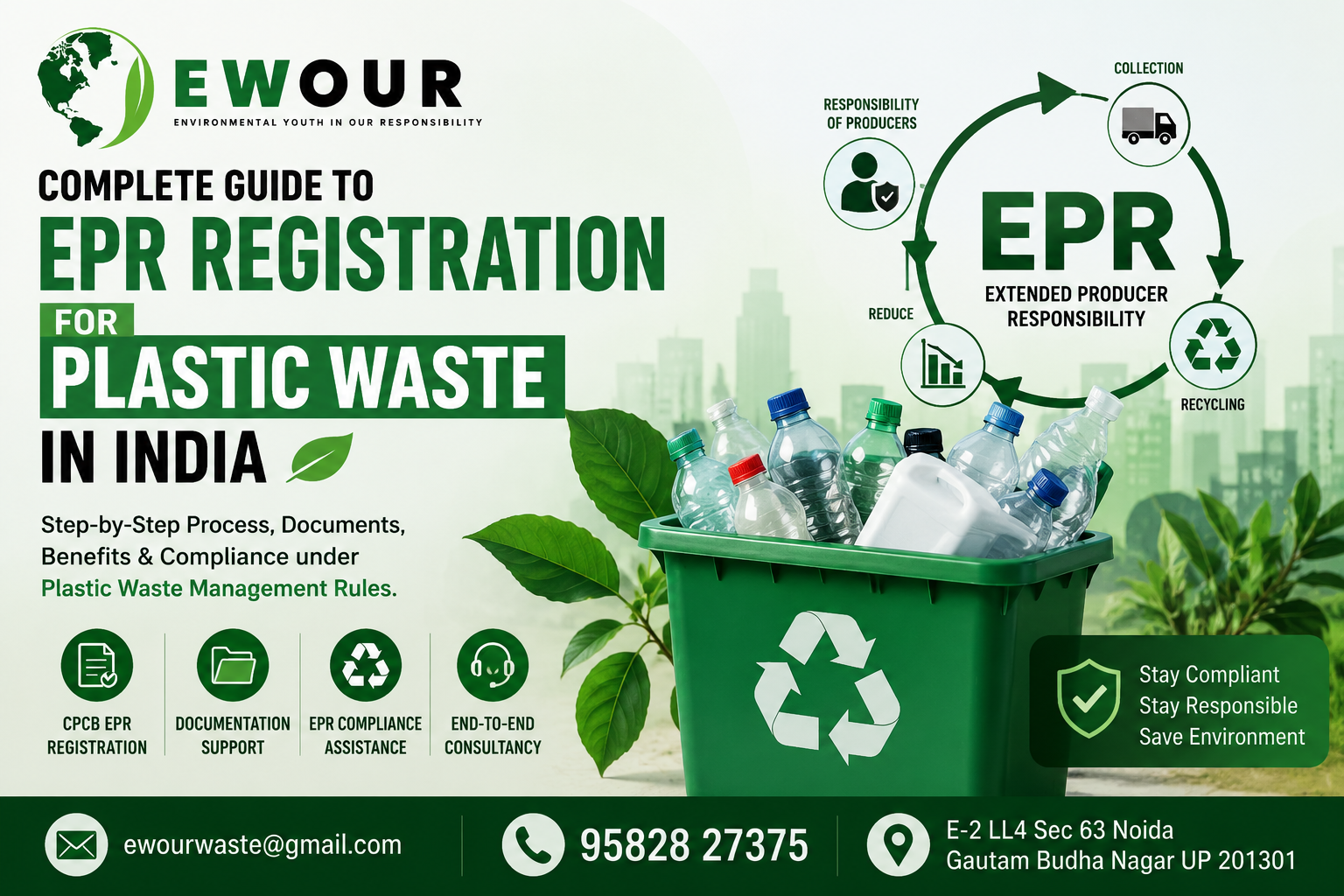
Plastic waste management has emerged as one of the major environmental duties for firms doing business within India. Such firms that manufacture, import, pack, or sell any plastic items have now been made accountable for the management of the waste caused due to the use of such products. This is precisely why EPR Registration of Plastic Waste in India plays an important role.
Extended Producer Responsibility, or more commonly referred to as EPR, is an environmental obligation mandated by the state authorities wherein producers, importers, and brand owners become responsible for the recycling and disposal of plastic waste. This entire process is regulated by CPCB under the Plastic Waste Management Rules India.
The people who often forget about their responsibilities will be faced with numerous difficulties. On the other hand, those individuals who strictly follow the rules make sure that they work effectively and gain their respectability.
Understanding EPR Registration for Plastic Waste
It becomes compulsory for companies manufacturing any packaging and plastic-containing products in India to go through EPR registration. The logic behind EPR India revolves around the principle that any company which benefits from plastics is obliged to take some responsibility regarding the management of waste that arises post-consumption.
As per the guidelines under CPCB EPR Registration for Plastic Waste Management, there is a need for a company to recycle as per the target set by authorized recyclers along with maintaining records regarding waste processing.
This typically pertains to:
- Businesses manufacturing plastic packaging material
- Companies importing goods in packaged form in India
- Business entities selling goods in plastic packaging
- Businesses engaged in e-commerce and use plastic packaging
Many firms feel that EPR is applicable to big organizations only. But in fact, many medium-sized companies will also be required to comply with EPR because of the nature of their packaging.
Why EPR Compliance Matters More Than Ever
A huge quantity of plastic waste is produced annually in India, out of which a substantial part remains unattended. This raises several worries for both the environment and public health. To combat this situation, the Indian government has increased its compliance regulations regarding the Plastic Waste Management EPR Rules 2026.
Proper EPR compliance helps businesses:
- Avoid legal complications and penalties
- Maintain uninterrupted business operations
- Improve brand reputation and customer confidence
- Support sustainable recycling practices
- Achieve environmental and business responsibility objectives
Awareness about sustainability issues and eco-friendliness is on the rise among consumers. Companies managing their plastic waste are perceived as more responsible and forward-thinking than others.
Who Should Register for Extended Producer Responsibility in India?
Perhaps the first question that businesses ask themselves is whether they really need to register under the EPR scheme. For the majority of cases, if an enterprise is introducing any form of plastic packaging into circulation, then registration might be needed.
This would include:
| Business Type | EPR Requirement |
|---|---|
| Importers | Required |
| Brand Owners | Required |
| Manufacturers | Required |
| Online Sellers | Often Required |
| Packaging Companies | Required in many cases |
Plastic Waste EPR Obligation of Importers and Brand Owners has gained greater significance in light of how close government authorities are keeping watch on packaging activities.
Documents Required for Plastic Waste EPR Registration
Documentation is one of the most cumbersome stages of the entire process, as even a tiny error may cause unnecessary delays.
Documents that may be required for Plastic Waste EPR registration could be:
- PAN card of the company
- GST registration certificate
- IEC certificate for importers
- CIN or company incorporation certificate
- Authorized signatory details
- Plastic packaging details
- Product information
- Recycling agreements
- Business registration certificates
Organizing all the relevant documents well in advance of beginning the registration procedure will ensure you do not waste much time and effort.
How to Apply for Plastic Waste EPR Registration in India
Online Plastic Waste EPR Registration Process is performed via CPCB website. Although the procedure is online, many businesses find the process difficult to handle due to compliance reasons and documentations.
Here are the steps involved in the process.
Business Registration on CPCB Portal
The company first creates an account on the CPCB EPR portal registration system and submits basic business information.
Submission of Packaging Details
Firms must report the kind and volume of plastics introduced into the market.
EPR Plan Preparation
An EPR action plan explaining collection mechanisms, recycling methods, and waste management targets is prepared and submitted.
Recycler Agreements
Recyclers or processors are appointed to complete the EPR and documentation work.
Review and Approval
The process of reviewing the application for certification by authorities is followed.
Despite how straightforward the process may sound, there are some challenges that may arise during actual implementation.
Challenges Businesses Commonly Face
Businesses may underestimate the complexity of the whole EPR process. The regulations keep changing, and it becomes hard to comply with them without professional help.
Some challenges faced by businesses include:
- Incorrect packaging classification
- Incomplete documentation
- Delays in CPCB approvals
- Difficulty finding authorized recyclers
- Errors in EPR annual return filing
- Confusion regarding recycling targets and obligations
These challenges are one of the main reasons businesses increasingly seek professional EPR compliance services India.
Why do Companies Need Professional EPR Consultants?
The process of EPR registration can be quite complicated, particularly for organizations that have no previous experience with it. The services of the Best EPR Consultant for Plastic Waste Management can help minimize the risk of non-compliance and streamline operations.
The services of the Plastic Waste Management Consultant usually involve:
- Documentation preparation
- CPCB registration support
- EPR action plan drafting
- Recycler coordination
- Annual return filing
- Compliance Monitoring
Professional help enables organizations to keep abreast of regulatory changes without making compliance errors that may delay approvals.
Relevance of Registering Plastic Waste Recycling
Besides being legally required, plastic waste recycling is a necessary environmental practice since failure to adhere will lead to land pollution, choked drains, water contamination, among other negative environmental impacts.
The Plastic Waste Recycling Registration guarantees proper handling of waste through legal recycling practices rather than illegal disposal routes.
Recycling facilitates:
- Better resource recovery
- Reduced landfill dependency
- Cleaner urban environments
- Sustainable waste management systems
Companies actively supporting recycling initiatives often strengthen their public image and build stronger long-term customer trust.
How Ewour Waste Management Supports Businesses
Ewour Waste Management Pvt. Ltd. is dedicated to offering professional guidance for businesses requiring services for EPR Registration for Plastic Waste in India. The company can help businesses make their documentation, registration, compliance, and processes at CPCB hassle-free.
Rather than spending time on handling technical paperwork and compliance formalities, businesses can concentrate on other aspects of their work while leaving the rest to professionals.
This may include:
- CPCB plastic waste authorization assistance
- Documentation review
- Portal registration support
- EPR compliance management
- Annual filing support
- Regulatory guidance
For businesses operating in competitive industries, timely compliance can prevent unnecessary disruptions and help maintain smooth operational continuity.
Final Thoughts
EPR registration for Plastic Waste in India has transcended its conventional status and now stands as an integral process for businesses to conduct themselves sustainably and responsibly. Companies making use of plastic packaging should familiarize themselves with the requirements and develop a systematic approach towards waste management to ensure compliance in the future.
Environmental laws and policies will continue to be strengthened by the government, and companies that do not follow suit will find themselves under increasing pressure in the years to come. The proper registration of EPR will not only ensure the safety of the company from legal repercussions but will also lead to cleaner environments, sustainable recycling, and environmental protection.
Companies that prioritize compliance today are sure to benefit in the future.