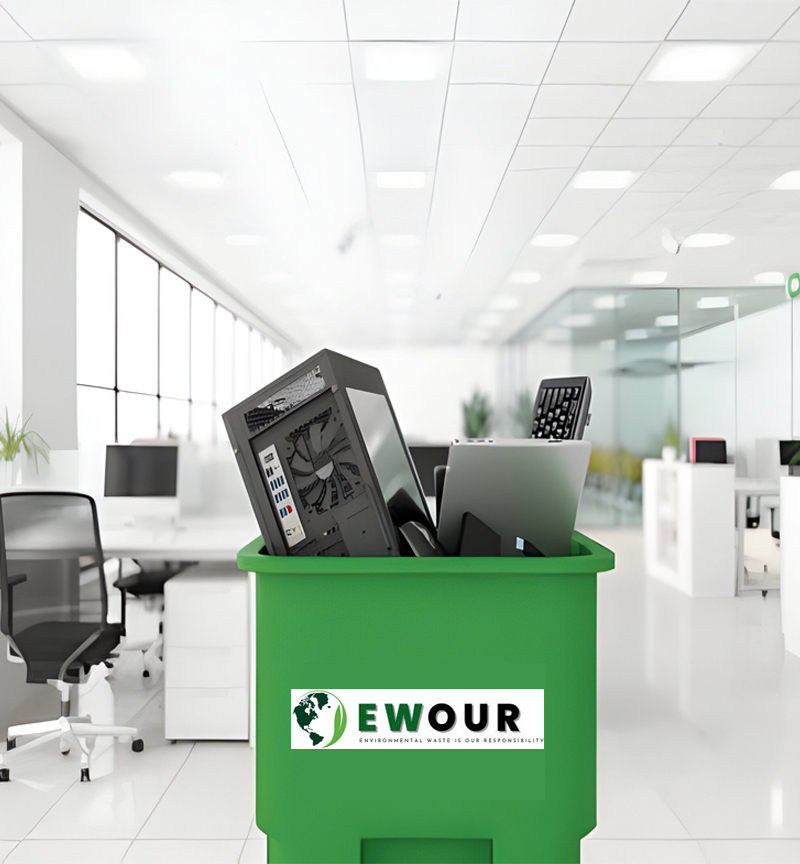
What is E-Waste EPR Registration?
The EPR Registration of E-Waste is a mandatory procedure that must be undertaken by any business entity which engages in the manufacture, importation, sale, or distribution of electric and electronic products. Under the EPR system, the organizations are accountable for the environmentally sound recovery and disposal of e-waste arising from their products.
CPCB E-Waste Registration is a way to show your dedication to sustainability and ensures that you are complying with government rules. Non-compliance can result in regulatory action, fines, and operational constraints.
Why is CPCB E-Waste EPR Registration Important?
CPCB E-Waste EPR Registration is a compulsory process which needs to be followed by all producers, importers, manufacturers, and brand owners dealing in the manufacture, import, or sale of electrical and electronic equipment in India. As per E-Waste Management Rules, all such organizations need to have E Waste EPR Registration India in order to responsibly collect and recycle electronic waste arising out of their products.
Benefits of obtaining E Waste EPR Registration India include:- Compliance with CPCB guidelines
- Increased environmental responsibility
- Better company reputation
- Decrease in legal and compliance risk
- Support to sustainable recycling practices
- Contribution to India’s circular economy initiative
The Extended Producer Responsibility (EPR) system is designed to enhance environmental sustainability and makes manufacturers responsible for taking their products back at the end of their lives and ensuring that they are environmentally friendly. CPCB E-Waste EPR Registration is a system where businesses prove that they are complying with rules laid down by the CPCB of MoEFCC.
EPR Registration for E-Waste Management Rules 2022
It is to separate the waste during the manufacturing of products so that it can be recycled and dumped responsibly at the recyclers. Recycling it well so that usage of raw material is less and less energy is used. There is less land, air, and sea pollution and no threat to the environment. We as EPR Registration consultants in India make sure that the 3Rs of recycling (reduce, recycle, and recuse) are followed from cradle to grave.
TheE-Waste Rules was a first attempt for India and these were first adopted in the year 2011 with force being felt in the year 2012. Initially, it shouldered the responsibility from manufacturers but, a revamped one with wider coverage to include bulk consumers, refurbishes, recyclers and demounting agents among others was rolled out in 2016.
This revision, furthermore, made the implementation of E-Waste Management Rules, 2022, strongly based on Extended Producer Responsibility (EPR), as well as a few essential matters regarding registration, authorization, and implementation procedures of this rules were also updated. Announced by the Ministry of Environment, Forests, and Climate Change on November 2, 2022, the new E-Waste Management Rules 2022, shall attain enforceability from April 1, 2023.
Who Needs E Waste EPR Registration India?
The E waste EPR registration in India is compulsory for enterprises producing, importing, distributing, selling, and placing electrical and electronic devices in the Indian market. This process of registration is required by many different companies involved in the electronics supply chain, and it is an integral component of complying with the E-Waste Management Rules set by the CPCB.
The following entities generally require CPCB E-Waste EPR Registration:- Electronics Manufacturers
- Importers of Electronic Products
- Brand Owners
- Producers of Electrical Equipment
- Online Electronic Product Sellers
- Technology Companies
- Consumer Electronics Businesses
These companies will take care of the proper collection, recycling, and disposal of the electronic products which reach the end of their life cycle. Getting
Documents Required for EPR Registration for E-Waste
Getting E Waste EPR Registration in India involves submission of different kinds of documentation related to business, technicalities, and compliance issues to the Central Pollution Control Board (CPCB). Documentation plays a vital role in the entire procedure of registration. At Ewour, our compliance experts help businesses with the preparation and submission of all relevant documentation in regards to CPCB E-Waste EPR Registration. We provide our clients with assistance in everything that is related to EPR registration without any hassles.
- Proof of address for the Manufacturer/Importer.
- GST Certificate reflecting the manufacturing unit’s address
- Company Registrar or Directorate of Company documents or Import-Export code letter.
- Agreements with dealers, collection centers, recyclers, and disposal facilities (TSDFs), etc.
- Self-declaration of RoHS compliance
- Technical documents (supplier declaration, materials descriptions, analytical test results)
- Permissions/licenses from relevant ministries/departments and the business as given below:
- TIN, PAN, incorporation certificates
- IEC copies for importers
- Authorization from SPCBs/PCCs
- EPR plan documents
- Details of awareness programs and initiatives
- Estimated EPR budget allocation.
- Memorandum of Association
- Certification of Incorporation (CIN)
- Copy of DGFT permission/license (IEC certificate
The preparation of the right set of documents is an important aspect in achieving successful EPR Registration for E-Waste. This can be achieved easily with Ewour through its professional consultation, documentation, and compliance support service.
Key Responsibilities of Manufacturers Under E-Waste EPR Compliance
The manufacturers are important in making sure that sustainable e-waste management and protection of the environment takes place. According to E-Waste Management Rules, companies engaged in the manufacture of electrical and electronic products have to get an E Waste EPR Registration India under the guidelines set by the Central Pollution Control Board (CPCB). The registration for CPCB E-Waste EPR is not just an obligation but is part of responsibility and sustainability too.
The following are the key responsibilities of manufacturers under EPR Registration for E-Waste:- Ensure that you have a genuine E-Waste EPR Certificate and follow the CPCB rules.
- Ensure the collection, channelizing, and eco-friendly recycling of e-waste from your products.
- Establish effective take-back and collection mechanisms for end-of-life electronic products.
- Collaborate with authorized recyclers, dismantlers, and collection centers for responsible e-waste processing.
- Create awareness campaigns for consumers about the proper disposal and recycling of electronic waste.
- Keep proper documentation, make submissions and ensure all requirements for CPCB E-waste registration are met.
- Help in resource recovery and development of circular economy through responsible recycling
There are certain materials within e-waste which could have an adverse effect on human health as well as the environment. Through services of E-Waste Compliance and CPCB E-Waste EPR Registration compliance, manufacturers could minimize environmental risks, achieve improved sustainability performance, and move towards building a cleaner future. Not only would compliance with E Waste EPR Registration in India help companies adhere to the law, but it will also enhance their image as responsible entities.
How to Apply for EPR Authorization? [EPR Registration Process]
Getting E Waste EPR Registration India is crucial for the manufacturers, importers, and producers of electrical and electronic equipment. This procedure comes under the control of the Central Pollution Control Board (CPCB). It is necessary for the firms to comply with the environmental norms specified. A successful CPCB E-Waste EPR Registration is possible only with good documentation, proper planning, and compliance with the regulations. Following the registration procedure will help in getting the E-Waste EPR Certificate. Through E-Waste EPR Registration India, it is possible to make sure that the producers take the responsibility of collection and recycling of electronic waste from the equipment produced by them.
There are below mentioned requirements for EPR Authorization Registration for E-Waste Management requires compliance with specific guidelines.- Documents:- keep all documents in check and place for submitting an application for EPR authorization.
- Complete the application:- for application, all the details are to be filed for EPR registration in India. One should prepare an EPR plan too.
- Offline submission of application:- one needs to print a hard copy of the application including details about the producer and EPR plan, and finally there is submission of it by hand.
- Application check:- after this, an official from CPCB checks your application and approves your plan. And if there are insufficient or missing documents, within 25 days of receipt- a sufficient explanation must be given to the CPCB official.
- Approval grant :- Authorities will check that it is all correct before registering this EPR schedule. It will finally be approved by the divisional head.
- Issuance:- once it is accepted and approved, CPCB grants permission of the proposed plan as to which is called as issuance of environment protection rights license to the companies
- Monitoring:- the applicant then should fulfill the conditions and regulations that are there in the authorization. One should follow up after that.
Thus, keeping these steps up consistently and working side by side with the law enforcement bodies, companies are able to achieve EPR Authorization and contribute to the sustainable management of wastes.
The Future of the Expanding E-Waste Management Sector
India has seen rapid expansion in the field of electronics manufacturing and technology, which has led to increased production of electronic waste. With increasing awareness about the environment and compliance with environmental laws, there is an increasing need for services related to E-Waste Compliance and sustainable solutions. Companies that have CPCB E-Waste EPR registration and comply with environmental laws are contributing significantly towards a sustainable future.
Industry specialists believe that the Indian country's industry for the management of electronic waste will continue growing in the next few years, offering new opportunities to businesses that deal with the collection, recycling, reconditioning, recovery, and management of resources. The growth will be driven by the government initiatives and technological advancements as well as E Waste EPR Registration or compliance in India .
By 2024, the Indian e-waste management market is expected to grow to a remarkable ₹18,913 crore (US$2.5 billion), according to experts. The significant potential for companies providing e-waste collection, disassembly, recycling, and refurbishment services is indicated by this exponential increase. Through a number of initiatives, the Indian government is actively encouraging proper e-waste management. Among them are:
- Producer Responsibility Obligations (PROs):-To ensure environmentally sound e-waste processing and strong collection networks, the government is promoting the creation of PRO organizations headed by producers.
- Grants & Subsidies:- Companies that invest in e-waste processing facilities and cutting-edge recycling technology are eligible for financial incentives.
- Programmed for the Development of Skills:-The government is working with industry players to design training courses that will provide employees with the abilities they need to handle e-waste safely and effectively.
- Innovations in technology:- Such technological breakthroughs as AI-driven waste sorting, automated dismantling technology, urban mining, and material recovery have become part of e-waste management in the future. These innovations enhance recycling efficiency, resource recovery, and environmental sustainability.
The future for India’s e-waste management industry looks very bright indeed. This is due to the fact that companies which adopt sustainable processes today through the use of the CPCB E-Waste EPR Registration and E-Waste Compliance Services would find themselves well-positioned for the future..
Why Choose Ewour?
Ewour is an expert compliance firm in providing unique EPR Registration for E-Waste and Waste Management Compliance Services. We have experts in compliance regulations who are knowledgeable about our clients' industries.
Our Advantages- Expert assistance for CPCB E-Waste Registration
- Complete documentation assistance
- Efficient process management
- Specialists for compliance
- Nationwide services available
- E-Waste Compliance Services
- Help to obtain E-Waste EPR Certificate
With Ewour, organizations will have access to an experienced compliance firm that will help you register your business under the E-Waste EPR Registration, approval, and compliance without any stress.
These encouraging actions create a favourable climate for developing India’s e-waste management sector.
| S. No | Categories of electrical and electronic equipment | EEE Code | Average Life |
|---|---|---|---|
| 1 | Centralized data processing: Mainframe | ITEW1 | 10 |
| 2 | Centralized data processing: Minicomputers ITEW1 5 | ITEW1 | 5 |
| 3 | Personal Computing: Personal Computers (Central Processing Unit with input and output devices) ITEW2 6 | ITEW2 | 6 |
| 4 | Personal Computing: Laptop Computers (Central Processing Unit with input and output devices) | ITEW3 | 5 |
| 5 | Personal Computing: Notebook Computers | ITEW4 | 6 |
| 6 | Personal Computing: Notepad Computers | ITEW5 | 6 |
| 7 | Printers including cartridges | ITEW6 | 10 |
| 8 | Copying equipment | ITEW7 | 8 |
| 9 | Electrical and electronic typewriters ITEW 5 | ITEW8 | 5 |
| 10 | User terminals and systems ITEW 6 | ITEW9 | 6 |
| 11 | Facsimile | ITEW10 | 10 |
| 12 | Telex | ITEW11 | 5 |
| 13 | Telephones | ITEW12 | 9 |
| 14 | Pay telephones ITEW13 9 | ITEW13 | 9 |
| 15 | Cordless telephones ITEW14 9 | ITEW14 | 9 |
| 16 | Cordless telephones ITEW14 9 | ITEW15 | 7 |