Introduction
The problem of waste production is becoming one of the fastest growing environmental issues across the globe. The reason behind this is the increase in urbanization, the rise in industrialization, changes in consumer behavior, and population growth. It is because of this that there has been a rising need for effective Waste Management Services.
Waste management in India is not merely confined to the conventional aspect of gathering and discarding garbage. These days, companies are looking towards making sustainable approaches to their waste management needs that include resource recovery, waste management, industrial recycling, Extended Producer Responsibility (EPR), and environment protection. The collaboration with a reputed waste management company will help companies comply with the rules and regulations made by Central Pollution Control Board (CPCB) and State Pollution Control Boards (SPCBs).
A good Waste Management Consultant assists industries in minimizing their environmental impact, ensuring better performance in sustainable practices, maintaining compliance with regulations, and promoting circular economy. In cases involving municipal solid waste, plastic waste, industrial waste, e-waste, battery waste, tyre waste, or hazardous waste, waste management becomes a key aspect that ensures public and environmental safety.
This guide covers all aspects of Waste Management in India, from waste classification and management processes, to recycling and industrial waste management, to regulations and compliance and the importance of waste management companies in creating a sustainable future.
What is Waste Management?
Waste Management involves the activities that are aimed at collection, transportation, separation, treatment, recycling, reuse, and disposal of the waste in a manner that does not affect the environment adversely.
The main objective behind it is to reduce the negative effects of waste on humans as well as the environment, along with making recycling possible whenever feasible.
For a professional waste management company, a process is generally followed that includes various important steps.
Waste Collection
The process of waste collection is the very first and most basic step in managing waste. This entails collecting wastes that have been produced by communities, businesses, industries, hospitals, schools, and other organizations.
Effective collection procedures avoid waste build up, minimize health hazards, and facilitate further processes.
Waste Segregation
Segregation of waste entails the separation of waste material into different groups like recyclables, organic waste, hazardous waste, plastic waste, and industrial waste.
Good segregation of waste leads to efficient recycling, minimal contamination, reduced costs of disposal, and higher rates of resource recovery.
Waste Transportation
Once the waste has been sorted, it is taken to recycling centers, treatment centers, processing centers, and other approved places by using special trucks.
Transportation plays an important role in achieving proper compliance and waste management.
Waste Processing and Treatment
There are several forms of waste management that can be used for various types of waste products. Waste products can either be recycled, composted, incinerated, processed into energy, or biologically treated.
This is done to minimize the environmental impact of the waste and maximize its recovery as useful resources.
Resource Recovery
Resource Recovery is another critical aspect in which Modern Waste Management Services focus much on. There are many materials that can be recovered and recycled, including plastics, papers, metals, glass, electronics, and other items that can be put back into the production process.
Safe Disposal
Some forms of waste cannot be recycled or reused at all. Such wastes need to be disposed of in an environmentally friendly manner, such as through engineered landfills or treatment plants.
In today’s world, waste management has become an important part of environmental protection and sustainable business practice.
Why Waste Management is Important in India
Millions of tons of waste are produced by India annually. Unless appropriate waste management systems are put in place, such a high volume of waste may pose numerous problems environmentally, socially, and economically.
Environmental Protection
The primary reason for implementing effective Waste Management Services is the environmental protection aspect.
If waste management services are not effectively managed and controlled, they might lead to:
- Pollution of the air
- Pollution of waters
- Contamination of soil and ground waters
- Marine pollution
- Environmental damage
Waste plastics dumped into rivers, lakes, and seas can pollute the ecosystem for decades to come. Likewise, harmful chemicals from industrial waste can be harmful to both people and animals by polluting the soil and water resources.
An expert Waste Management Consultant provides an organization with proper solutions regarding sustainable waste practices.
Protection of Public Health
Improperly handled waste makes for an ideal breeding ground for rodents, insects, and disease-carrying microbes. Open dumping, improper disposal methods, and poorly managed landfills contribute to higher incidences of infections and respiratory diseases. Proper handling, disposal, and collection of waste can go a long way towards creating healthier environments.
Resource Conservation
Several waste streams have useful components that may be recycled and reused.
Some of them are:
- Plastic recycling
- Metal recycling
- Paper recycling
- Glass recycling
- Component extraction from electronics
Professional Industrial Waste Recycling Services promote the conservation of natural resources by eliminating the use of virgin raw material in manufacturing processes.
Climate Change Mitigation
Landfills produce methane, which is a potent greenhouse gas compared to carbon dioxide (CO2).
Through the support for recycling, composting, energy recovery from waste, and proper waste management strategies, institutions can minimize their greenhouse gas emissions and thus contribute to efforts towards combating climate change.
Regulatory Compliance
Indian businesses that work within India must follow environmental rules as per the guidelines provided by the CPCB and the SPCBs.
Professional Environmental Compliance Services assist companies in meeting their legal obligations concerning waste production, storage, transport, recycling, processing, dumping, and more.
Being compliant will not only decrease your risk of fines and lawsuits, but it will also support the efforts for sustainable development.
Types of Waste Managed in India
Different kinds of waste need particular methods for handling, treatment, and disposal. Knowledge about these categories is necessary for developing effective waste management plans.
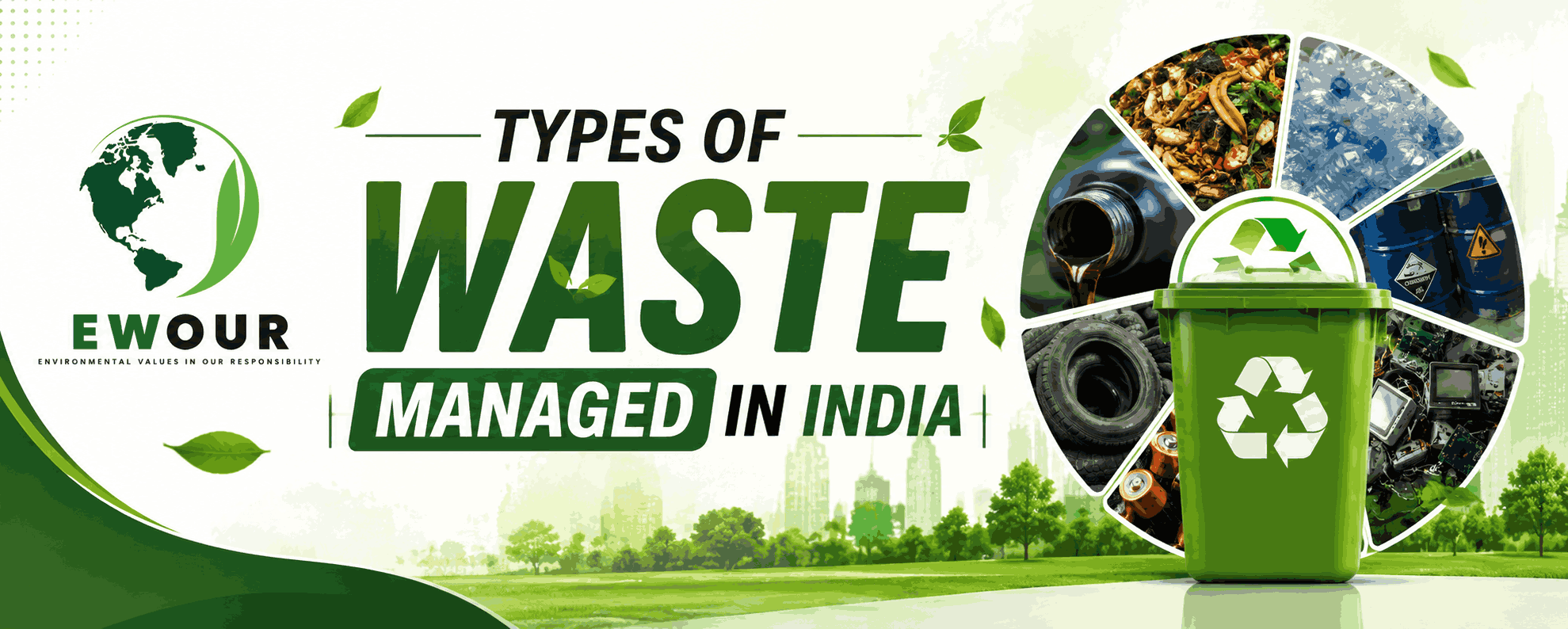
Municipal Solid Waste (MSW)
Municipal Solid Waste (MSW) refers to the day-to-day waste produced from domestic activities such as homes, offices, schools, shopping centers, and other commercial establishments.
Some common examples are:
- Waste food
- Plastic waste
- Waste paper
- Cardboard waste
- Waste glass
- Textile wastes
Management of municipal waste involves segregation, recycling, composting, resource recovery, and proper disposal techniques.
Plastic Waste
Plastic waste has gained prominence as an environmental issue around the world.
Some common sources of plastic waste are as follows:
- Packaging waste
- Plastic containers
- Bags
- Bottles
- Consumer goods
Plastic Waste Management India is a crucial area that needs attention owing to the increasing environmental issues and regulatory compliances.
A professional Plastic Recycling Company India can play an important role in recycling plastic waste.
Industrial Waste
Industrial waste is produced from various stages such as manufacturing, processing, production, and industries.
Common types of industrial wastes include:
- Chemical waste
- Industrial sludge
- Packaging waste
- Metal scrap
- Process waste
- Production by-products
The Professional Industrial Waste Management Services assist the clients in disposing of industrial waste in a safe manner.
In many cases, companies engage the services of an experienced Industrial Waste Management company.
Hazardous Waste
Hazardous waste refers to material that is dangerous for various reasons; it might be poisonous, corrosive, flammable, reactive, or otherwise dangerous to people and the environment.
These include:
- Solvents
- Industrial chemicals
- Paint residues
- Contaminated materials
- Toxic by-products
Due to their dangerous nature, hazardous wastes need to be handled, stored, transported, processed, and disposed of using special measures.
E-Waste
E-Waste refers to electronic waste, which comprises the electrical and electronic products that become waste.
These include:
- Computers
- Laptops
- Mobile phones
- Printers
- Televisions
- Electronic accessories
Proffessional E Waste Recycling Services India are crucial in reclaiming valuable metals and parts without releasing dangerous elements into the environment.
With more electronic items being consumed, there is a need to manage the e-waste accordingly.
Battery Waste
Battery generate hazardous substances that need special recycling, but they are sources of valuable metals.
The development of electric vehicles, renewable power supply, and consumer goods has caused an unprecedented rise in battery waste production.
Effective management of battery allows not only to reclaim resources but also to protect the environment and human health.
Tyre Waste
Old tyres are a significant waste management issue due to their extensive consumption of space at landfills and their potential danger to the environment if not properly disposed of.
With new technological advancements, the waste can be recycled into a wide range of useful products such as fuel, rubber granules, and other valuable materials.
The efficient recycling of old tires helps conserve natural resources.
Used Oil and Waste Oil
Oil from machines, vehicles, factories, and industrial plants needs to be properly collected, treated, and recycled.
The improper disposal of used oil poses a risk to the environment by contaminating water sources, soil ecosystems, and groundwaters.
Waste oil management systems ensure that valuable resources are recovered without polluting the environment or breaking environmental regulations.
Waste Management Hierarchy
The Waste Management Hierarchy refers to a widely accepted concept which provides an order of preference for waste management methods depending on how environmentally friendly they are.
It acts as a roadmap for those organizations wishing to reduce waste creation.
Refuse
It is best to avoid waste production in the first place through the application of waste prevention measures.
Waste can be prevented in organizations by avoiding excess packaging, disposables, and unsustainable practices.
Reduce
Resource conservation leads to lower levels of waste production.
Manufacturers are increasingly coming up with products that require less raw materials, produce little waste, and last longer.
Reuse
Reuse of goods and materials increases their life span as well as reducing the requirement of new resources extraction.
Examples of reuse include reusable packaging material, reusable industrial containers, industrial pallets, and even storage facilities.
Recycle
The process of recycling turns discarded materials back into new products or raw materials for production.
Professional Industrial Waste Recycling Services help promote circular economy goals through the continued use of materials instead of their disposal.
Recover
Resource recovery entails extraction of usable resources, energy, or value out of waste materials that are not able to be recycled.
Energy recovery plants and material recovery plants are essential elements of resource recovery systems.
Dispose
Disposal will be seen to be the last resort when reusing, recycling, and recovering become impossible.
Disposal using scientific methods reduces the effects on the environment and ensures compliance with relevant laws.
Major Waste Management Methods
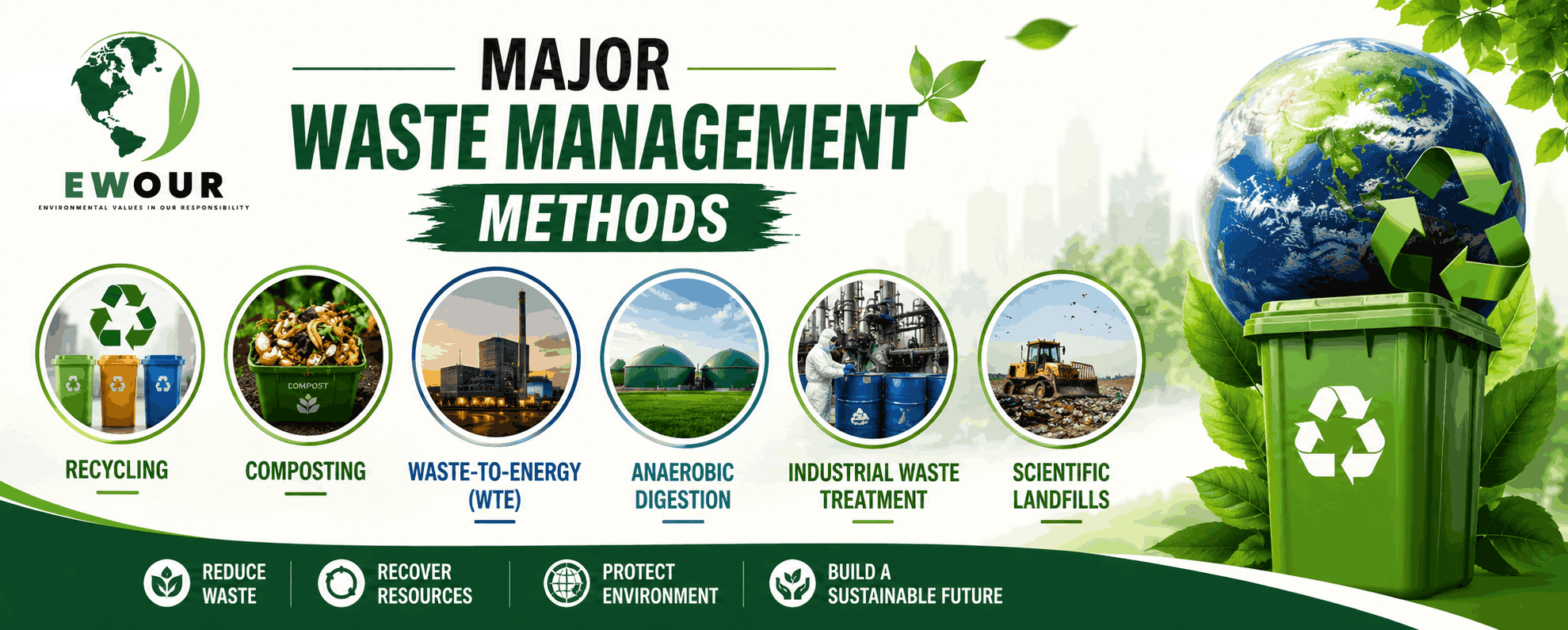
Recycling
Recycling is considered among the most effective and sustainable forms of waste disposal systems.
The recycling procedure usually includes:
- Collection
- Sorting
- Processing
- Manufacturing
- Recycling
Typically recycled items include:
- Plastic
- Paper
- Glass
- Aluminum
- Steel
Benefits of recycling include the reduction in reliance on landfills, conservation of resources, minimization of energy usage, pollution reduction, and job creation.
Composting
Composting is an ecological biological system through which organic waste is transformed into compost.
The following can be used for composting:
- Food waste
- Agricultural wastes
- Garden waste
- Organic waste from industries
Apart from reducing amounts of waste in landfills, composting helps in increasing soil fertility and sustainability of farming practices.
Waste-to-Energy (WTE)
The Waste-to-Energy (WTE) process refers to the transformation of waste that cannot be recycled into electricity, heat, or fuel.
Its advantages include:
- Low reliance on landfills
- Production of renewable energy
- Decrease in greenhouse gases production
- Better resource consumption
With sustainability being the focal point of most nations today, WTE facilities have become an important aspect of their investments.
Anaerobic Digestion
Anaerobic digestion is a biological method of decomposition of organic substances without the presence of air.
The process results in:
- Biogas
- Sustainable energy
- Organic fertilizer
The anaerobic digestion method is used extensively in food waste management, agricultural waste management, organic industrial waste management, and sewage sludge management.
Industrial Waste Treatment
Industrial waste often requires specialized treatment because of its complex composition and the potential presence of hazardous substances.
Professional Industrial Waste Disposal Company services typically include:
- Waste characterization
- Treatment planning
- Hazardous waste management
- Resource recovery
- Safe disposal solutions
These services help industries reduce environmental risks, improve compliance, and support sustainable operational practices.
Scientific Landfills
Modern scientific landfills are designed in a way that minimizes their effects on the environment and ensures safe waste disposal.
The following are some features of scientific landfills:
- Protective liners
- Leachate collection systems
- Groundwater monitoring
- Methane recovery systems
Despite being less favorable than recycling and resource recovery, scientific landfills still play an important role in waste management.