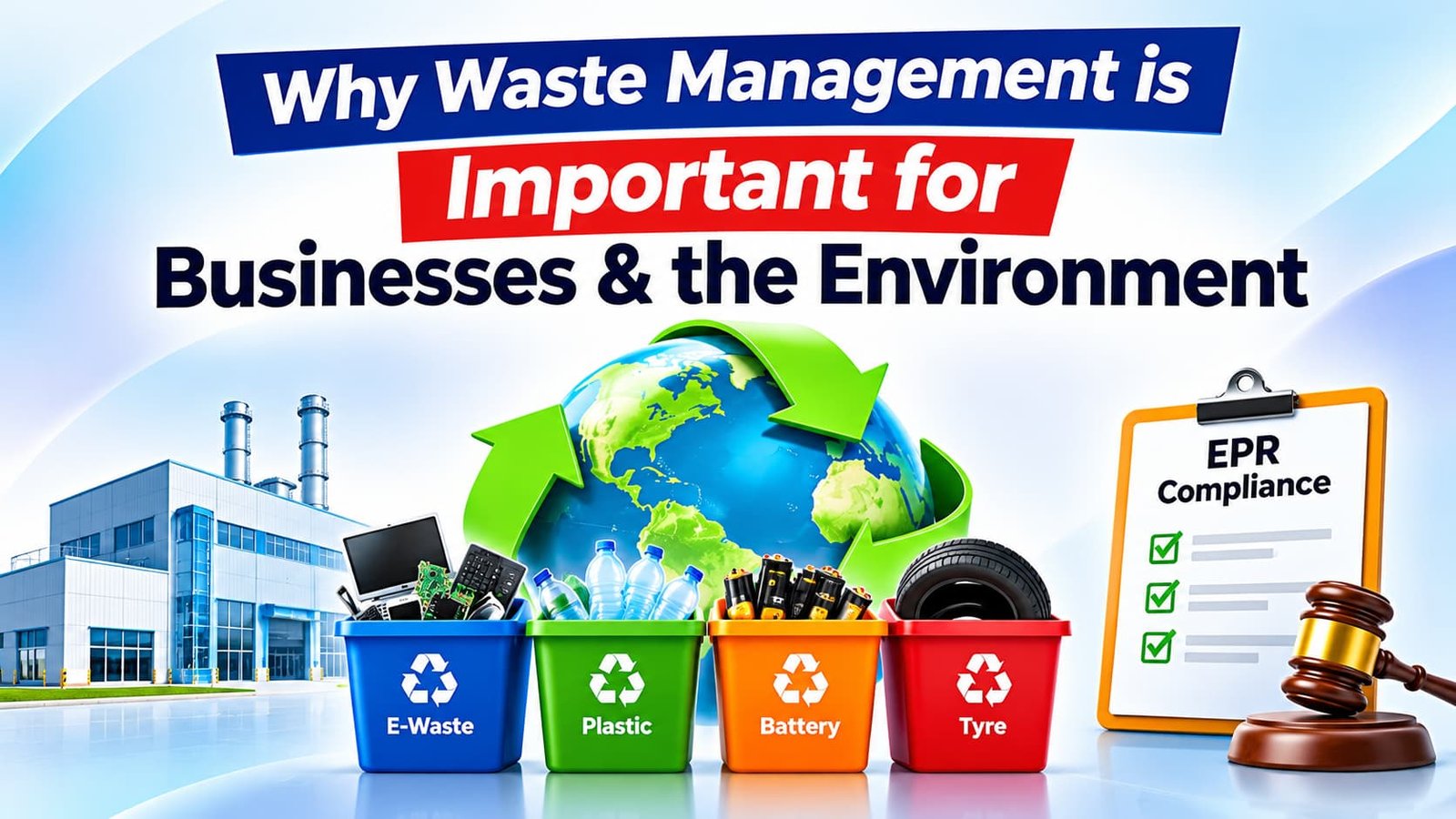
A manufacturing company can spend substantial money on raw materials, machinery, manpower, and manufacturing equipment. But if it does not take proper care to manage the waste produced by its operations, then it loses a good deal of its investment.
Unutilized materials, waste packaging, production scraps, used-up electronic goods, and industrial waste may incur higher costs and pose potential risks for the environment. They can also cause companies to face legal challenges and tarnish their reputations.
It is important to know the reasons why waste management is important for all manufacturers, product brands, compliance managers, and sustainability experts. It allows businesses to cut down on wastage and save on valuable resources, become more efficient, and perform environmental duties effectively.
It does not matter whether the company works in India, the USA, the UK, Europe, or the Middle East. Proper waste management should be a part of its operational activities.
What Is Waste Management?
Waste management involves the systematic approach to the collection, segregation, storage, transportation, treatment, recycling, recovery, and disposal of materials that have become obsolete and no longer useful.
Some examples of waste streams that can be generated by an organisation based on its operations and industry include:
- Industrial waste resulting from production processes.
- Plastic and packaging waste due to product delivery.
- Paper, cardboard, glass, and metal waste.
- Electrical and electronic equipment that have outlived their usefulness.
- Batteries of electronic products, cars, and industrial equipment.
- Waste products that need special handling due to their hazardous nature.
- Organic waste produced in food processing and workplace operations.
There is a specific way of handling each type of waste stream. Organisations cannot take the approach that any waste can be regarded as general waste and therefore managed in a particular manner.
A professional Waste Management Company can assist organisations in identifying the waste streams and finding the best collection, recovery, and disposal methods for them.
Why Waste Management Is Important for Businesses
Waste management is not only associated with environmental protection; it also involves operational expenses, resource utilization, legal duties, and business sustainability.
1. Reduces Business and Disposal Costs
If the business is disposing of its materials without assessing their recycling capability, then it will be disposing of any value associated with the resources that it has purchased.
This is because the manufacturing process may result in the formation of waste such as metal cuttings, scrap, waste packaging, and other unused raw materials. If this material is commingled, then the chances of recycling and reuse will be reduced significantly.
The benefits of having a proper waste management program include:
- Reducing the wastage of raw material.
- Improving production planning and inventory management.
- Reusing those materials that can be reused.
- Recycling those materials that can be recycled.
- Avoiding unnecessary costs of collection and disposal of material.
Businesses should take waste generation into consideration when considering how to control their costs.
2. Helps Businesses Meet Environmental Responsibilities
Waste Classification, Segregation, Storage, Transportation, Treatment, Recycling, and Reporting are managed differently in different countries.
For instance, companies doing business in India might be required to be aware of any waste management regulations and Extended Producer Responsibility, if appropriate.
Companies doing business in Europe, the USA, the UK, and elsewhere shall comply with respective national and/or regional waste regulations.
Thus, Environmental Regulatory Compliance is an important aspect of business waste management.
Businesses shall do the following:
- Determine the type of waste produced by each business.
- Understand the waste regulations applying to each waste type.
- Keep required records and documentation.
- Check the credentials of any waste handlers in case there is an authorization requirement.
- Be aware of any changes in the regulations.
- Check waste disposal routes and methods used by the contractors.
Companies should not rely on regulatory compliance in one country when doing business in other countries.
3. Protects Natural Resources
Discarded materials have other materials within them that can be reclaimed and reused.
Metals, plastics, paper, glass, and electronics could possibly be valuable even after their initial usage. Proper recycling could help reduce the demand for certain types of virgin raw materials.
For companies, the identification of recyclable materials can lead to the possibility of reducing waste and increasing the efficiency of the use of materials.
Not all materials are capable of being recycled. There are many factors that affect the possibility of recycling such as contamination, the type of material, infrastructure available, and cost.
4. Improves Brand Reputation
The environmental obligations of businesses are becoming more important to customers, investors, employees, and even business partners.
Inadequate management of waste can affect confidence in a business, especially if it leads to contamination, improper disposal, or unsubstantiated environmental claims.
Companies that are able to keep detailed waste records and show improvement will increase confidence in their stakeholders.
Environmental claims must always be substantiated. A company cannot claim itself to be totally sustainable because of having put in place a recycling program.
Environmental Benefits of Responsible Waste Management
Poorly managed waste can affect land, water, air quality, ecosystems, and human health. Responsible handling helps reduce these risks.
1. Reduces Land and Water Pollution
Some wastes from industries, batteries, electrical devices, and certain chemicals might have harmful ingredients that necessitate special management.
If such waste products are handled poorly, they pose the threat of causing pollution.
Proper segregation, adequate storage, transportation, and treatment procedures will lessen the chances of pollution.
2. Reduces Pressure on Landfills
The functioning of landfills necessitates land use, infrastructure, monitoring, and management.
If reusable or recyclable products are disposed of directly without processing, valuable material is wasted, and unnecessary use of landfills occurs.
By giving priority to prevention and reuse, businesses can minimize the amount of waste that requires disposal.
3. Supports Climate Action
There are links between waste management and climate change because of material production, transport and waste.
Material that decomposes under the landfill conditions can release methane. New material production can use resources and energy.
A more efficient use of resources can help avoid some of these issues through the non-use of material and recycling of material that is fit for reuse.
The European Environment Agency has evaluated the potential benefits to climate change mitigation that come from selected circular economy measures in the European Union. According to their evaluation, there is potential for a reduction of about 22% of climate change impact from consumption in the European Union under the assumptions that are provided in their report.
This is a calculated value and does not provide an absolute number for any company or country.
How Businesses Can Implement Sustainable Waste Management
Sustainable Waste Management calls for corporations to take into account the environmental and operational effects of their waste through its entire process of disposal.
An effective scheme would be to prevent first, then recycle, and dispose properly.
1. Conduct an Industrial Waste Audit
An industrial waste audit helps businesses understand what they generate, where it originates, and how it is currently handled.
The audit should identify:
- Types and approximate quantities of waste.
- Departments and processes generating waste.
- Current collection and storage arrangements.
- Existing recycling and disposal routes.
- Waste handling and transportation costs.
- Opportunities for prevention and recovery.
The results provide a starting point for improving Industrial Waste Management Services and setting measurable targets.
2. Segregate Waste at the Source
Mixing different materials can make recycling difficult and may create contamination or safety risks.
Businesses should establish separate collection points for relevant categories, such as:
- Paper and cardboard.
- Plastic packaging.
- Metal and glass.
- Electronic waste.
- Batteries.
- Organic waste.
- Hazardous industrial residues.
Employees should receive clear instructions about segregation procedures and storage requirements.
3. Reduce Waste Generation
Recycling is good, but prevention is even better since it does not create material that could have been avoided from the start.
Companies can look at their product design, packaging requirements, purchasing policies, inventories, and manufacturing processes.
For instance, a company might cut back on packaging material through redesigning its packaging or using reusable shipping containers.
This will decrease waste and increase manufacturing efficiencies.
4. Choose the Right Waste Management Partner
Some waste streams need special handling for their collection, transportation, treatment, or recovery.
In choosing a Waste Management Company in India or any other country, companies must consider the company’s capability to handle such specific waste streams.
Important considerations include:
- Whether the provider has the required authorisations.
- Which treatment or recovery processes are used.
- Whether collection and transportation are documented.
- Whether required records or certificates are provided.
- How rejected and non-recyclable materials are handled.
A low collection price should not be the only selection criterion. Businesses should understand what happens to their waste after it leaves their premises.
5. Monitor Waste Management Performance
A waste management programme should be reviewed regularly.
Businesses can monitor:
- Total waste generated.
- Quantity of materials reused.
- Quantity sent for recycling or recovery.
- Waste requiring final disposal.
- Waste-related operating costs.
- Progress against reduction targets.
Consistent measurement helps management identify problems and evaluate whether improvement measures are working.
Understanding the Circular Economy
The Circular Economy represents an economic strategy whereby products, parts, and materials remain in circulation as much as possible.
This contrasts with the linear economy model where resources are extracted and transformed into products that are eventually disposed of.
The circular economy promotes businesses to:
- Design products for durability and repair.
- Reduce unnecessary material consumption.
- Reuse products and components.
- Recover materials through appropriate recycling processes.
- Improve manufacturing processes to minimise waste.
For instance, a producer can redesign packaging, make efficient use of transportation containers, and recycle production waste from clean production.
This can be done to conserve the material value and prevent any wastage of resources. However, companies need to examine the entire procedure instead of taking for granted that all recycling processes create a benefit to the environment.
Special Waste Categories Businesses Should Monitor
Some waste categories require more specialised management than ordinary commercial waste.
Electronic Waste
Discarded computers, electrical devices, communication equipment, and electronic parts may have usable material or substances that need controlled disposal.
Companies will need to assess the appropriate arrangement for collecting, handling data, disassembling, and recycling their items.
In Indian companies, the relevant processes would include e-waste management in India.
Plastic and Packaging Waste
Large volumes of plastic waste can be generated by manufacturers, importers, and brand owners.
They should look at packaging design, reducing material, segregation, and recovery pathways.
If applicable to India, they need to know their responsibilities regarding the plastic waste and the EPR regime.
Battery Waste
These batteries could contain materials that may need special care for recycling.
It is recommended that companies do not mix batteries with ordinary garbage but find proper collection and treatment methods.
Firms dealing with battery manufacturing and/or import and any other business connected with batteries should familiarize themselves with relevant regulations.
Industrial Waste
There can be various types of waste generated by manufacturing units, like process waste, scrap, chemical waste, and packaging waste.
An efficient program would include categorization of the wastes and their appropriate handling or recovery methods.
Common Waste Management Challenges and How to Avoid Them
Lack of Waste Data
Without proper records, businesses cannot determine where their biggest wastes originate.
Solution: Perform regular audits and keep consistent records of waste types and amounts.
Mixing Different Waste Categories
Mixed waste decreases the scope for recycling and increases contamination risks.
Solution: Segregation procedures and employee training should be implemented.
Unclear Regulatory Responsibilities
Businesses operating in multiple countries may incorrectly assume that the same requirements apply everywhere.
Solution: Identify the relevant jurisdiction, waste category, and business responsibilities before establishing compliance procedures.
Choosing Providers Only on Price
A low-cost collection service does not guarantee appropriate treatment or recovery.
Solution: Review authorisations, treatment methods, documentation, and the provider's experience with the relevant waste category.
Treating Recycling as the Only Solution
Recycling does not prevent waste from being generated.
Solution: Prioritise prevention and reuse before selecting recycling or disposal routes.
Practical Waste Management Checklist for Businesses
Manufacturers, brand owners, and compliance managers can use this checklist to review their current approach:
- Identify the main waste streams generated by the business.
- Record the source and approximate quantity of each waste category.
- Check applicable local and national requirements.
- Segregate materials at the point of generation.
- Identify opportunities for waste prevention and reuse.
- Select appropriate collection, treatment, and recovery routes.
- Verify relevant waste-handler credentials.
- Maintain required records and supporting documents.
- Set measurable improvement targets.
- Review performance and update procedures when operations or regulations change.
Frequently Asked Questions
1. Why is waste management important for businesses?
Through waste management, organizations can minimize material wastage, manage disposal costs, be environmentally responsible, and achieve operational efficiency. Waste management is also beneficial to the organization's reputation and its regulatory requirements.
2. How does waste management protect the environment?
Responsible waste handling can reduce pollution, limit unnecessary landfill disposal, conserve natural resources, and lower certain emissions associated with material production and waste treatment.
3. What is the difference between waste reduction and recycling?
Waste reduction prevents or minimises waste before it is generated. Recycling processes discarded materials so that recovered material can be used again. Prevention is generally preferable where practical.
4. What is sustainable waste management?
Sustainable waste management considers the environmental, economic, and operational impacts of handling waste. It prioritises prevention and reuse, supports suitable recycling and recovery, and ensures that remaining waste is treated or disposed of responsibly.
5. How can manufacturers improve industrial waste management?
Manufacturers can conduct waste audits, segregate materials at source, reduce production losses, reuse suitable materials, select appropriate waste handlers, and monitor performance through consistent records.
6. What is the relationship between waste management and the circular economy?
Waste management supports the circular economy by helping recover and retain the value of materials. Prevention, repair, reuse, and recycling can reduce demand for virgin resources and keep materials in productive use for longer.
7. Do waste management regulations apply in the same way worldwide?
No. Requirements differ between countries and may also vary between states, provinces, or regions. Businesses should check the rules applicable to their location, waste category, and operational responsibilities.
Conclusion: Make Waste Management Part of Business Planning
However, waste should not be considered an area that involves merely disposing of unwanted substances. The efficiency of resource usage, operational management, and dealing with environmental hazards is also involved.
The implementation of a well-planned programme can assist organisations in avoiding unnecessary losses, improving segregation, recovering valuable materials, and addressing relevant regulatory requirements.
For producers, brand owners, and compliance professionals, the first thing is to determine what type of waste is being produced by their business activities. Next, it becomes possible to reveal realistic opportunities for prevention, reuse, recycling, and proper management of waste.
Ewour Waste Management is intended to assist businesses in investigating responsible waste management and environmental compliance. Organisations can contact Ewour through its website.